Working with Multiple Coaches: Managing Training Load When Everyone Has a Plan
Working with Multiple Coaches: Managing Training Load When Everyone Has a Plan
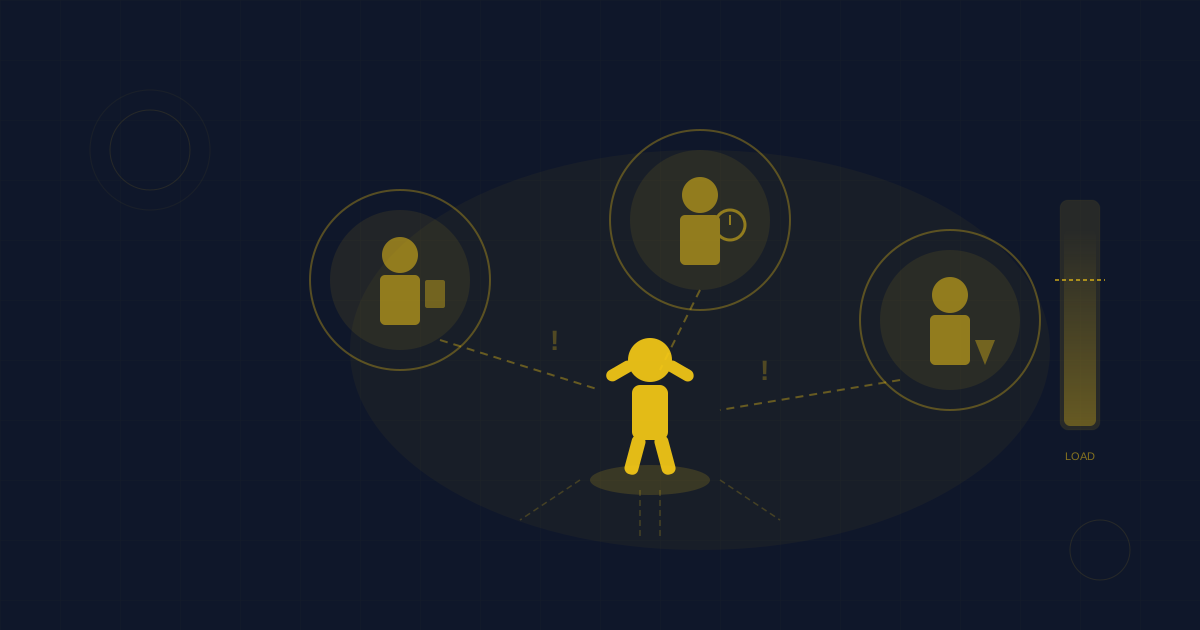
Your athlete trains with the team three days a week. Sees a personal trainer twice. Does agility work with a speed coach on weekends. Each coach has a plan. Each plan includes plyometrics.
Nobody’s coordinating. Nobody’s tracking total volume. And nobody knows why the athlete’s knees started hurting.
This scenario plays out constantly—and it’s one of the fastest routes to overtraining injuries in young athletes.
The Multi-Coach Problem
Here’s how it typically happens:
Team practice includes box jumps during conditioning. 60 contacts.
Personal trainer programs depth jumps for power development. 40 contacts.
Speed coach adds hurdle hops to the warmup. 50 contacts.
In isolation, each session looks reasonable. Combined? That’s 150+ ground contacts in a week from three different sources—before counting any additional jump training.
For an intermediate athlete, the recommended weekly range is 200-360 contacts across 2-3 sessions. This athlete just burned through half their weekly budget in supplemental work alone.
The problem isn’t that any single coach is doing something wrong. It’s that nobody has visibility into the full picture.
Why This Keeps Happening
Coaches don’t talk to each other. Team coaches focus on team objectives. Private trainers focus on individual development. Speed coaches focus on acceleration mechanics. Communication between them is rare.
Athletes don’t track (or understand) volume. Most athletes couldn’t tell you how many ground contacts they accumulated last week. They just do what they’re told.
Parents assume more is better. Hiring additional coaches feels like giving their kid an edge. They don’t realize they might be doubling or tripling plyometric exposure.
No centralized system exists. Even coaches who want to coordinate have no easy way to share training data across programs.
The Real Risk
Plyometric overtraining doesn’t announce itself with a single dramatic injury. It accumulates:
- Persistent knee soreness that “isn’t that bad”
- Ankle stiffness that doesn’t go away
- Declining jump performance despite more training
- Stress reactions that progress to stress fractures
By the time symptoms are obvious, the damage is done. Recovery means weeks or months of reduced activity—exactly what the athlete and parents were trying to avoid.
How to Fix It: A Practical Framework
Step 1: Audit the Current Situation
Before anything else, get a complete picture of the athlete’s weekly training:
| Session | Coach | Plyometric Exercises | Est. Ground Contacts |
|---|---|---|---|
| Team practice (M/W/F) | Coach Smith | Box jumps, conditioning jumps | 60/session |
| Personal training (Tu/Th) | Trainer Jones | Depth jumps, bounds | 45/session |
| Speed work (Sat) | Coach Lee | Hurdle hops, acceleration drills | 50/session |
Add it up. Compare to recommended ranges. You’ll likely find the total is higher than anyone realized.
Step 2: Establish One Person as the “Load Manager”
Someone needs to own the big picture. This could be:
- The primary strength coach
- The personal trainer (if they have the most frequent contact)
- A parent (if they’re organized and coaches will cooperate)
- The athlete themselves (if mature enough)
The load manager doesn’t control everyone’s programming. They just track total volume and flag when it exceeds safe limits.
Step 3: Create a Shared Tracking System
This is where most coordination efforts fail. Email chains get buried. Text threads get lost. Spreadsheets don’t get updated.
You need a single source of truth that all parties can access and update.
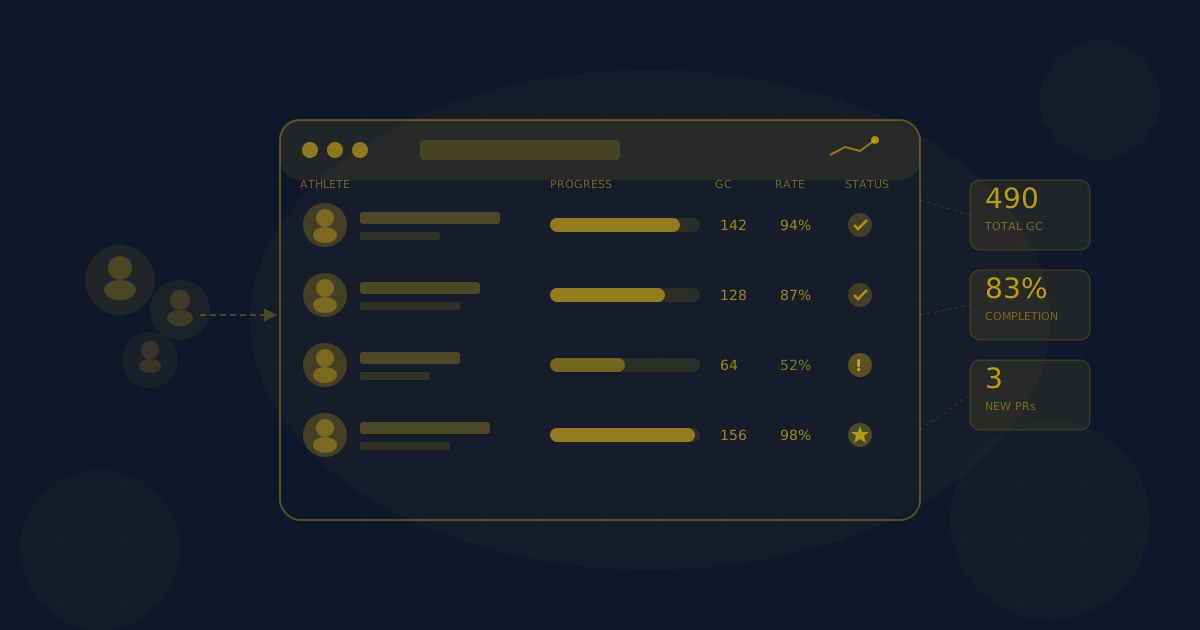
PlyoPlanner solves this directly. When all coaches use the platform:
- Each coach assigns their portion of training
- Ground contacts calculate automatically
- The Training Load Dashboard shows combined weekly volume
- Alerts fire when total exposure exceeds thresholds
Even if only one coach uses PlyoPlanner, they can input sessions from other sources to maintain a complete picture.
Step 4: Set Clear Boundaries
Once you have visibility, establish rules:
Weekly ground contact ceiling. Agree on a maximum based on the athlete’s training age. When you hit it, plyometrics stop regardless of which coach planned more.
Session spacing. No high-volume plyometric sessions on consecutive days. If team practice includes significant jump training Tuesday, private training Thursday should focus elsewhere.
Intensity rotation. Not every session should be high-intensity plyometrics. Coordinate so explosive work and lower-intensity conditioning don’t stack.
Step 5: Communicate Proactively
Send a weekly summary to all coaches involved:
- Total ground contacts logged
- Remaining volume budget
- Any concerns about fatigue or soreness
- Upcoming high-intensity sessions
A 30-second email prevents a lot of problems.
The Conversation Script
Not sure how to approach the other coaches? Here’s language that works:
“Hey Coach—I’m tracking total plyometric volume for [athlete] across all their training. I noticed we might be accumulating more ground contacts than ideal when we add up team practice, private training, and speed work. Could we coordinate to make sure we’re staying in safe ranges? I’m happy to share my tracking so we’re all on the same page.”
Most coaches appreciate the initiative. They don’t want to injure athletes either—they just lack visibility.
Red Flags to Watch For
Even with good coordination, watch for these warning signs:
- Athlete reports persistent joint soreness (especially knees, ankles)
- Jump height or power output declining over time
- Unusually slow recovery between sessions
- Athlete dreading plyometric work they previously enjoyed
- Changes in landing mechanics (compensating for pain)
If you see these, reduce volume immediately. Don’t wait for a diagnosis.
When Parents Need to Step In
Sometimes coaches won’t coordinate. Egos get involved. Nobody wants to reduce their programming.
In these cases, parents may need to make decisions:
- Pull the athlete from one program temporarily
- Mandate a reduced-volume week
- Require coaches to communicate or lose access to the athlete
It sounds harsh, but an overuse injury costs far more than a few missed sessions.
Special Case: In-Season vs. Off-Season
Multi-coach scenarios change with the competitive calendar:
In-season: Team training takes priority. Private coaches should reduce or eliminate plyometrics. Maintain existing power—don’t try to develop it during competition.
Off-season: This is when supplemental coaching adds the most value. Still coordinate, but there’s more room for developmental work.
Pre-season: Transition period. Volume should progressively decrease as competition approaches.
Make sure all coaches understand where the athlete is in their yearly plan.
Building Better Systems
The multi-coach problem isn’t going away. Youth sports are increasingly specialized, and parents will continue seeking additional training.
The solution is better systems:
- Centralized tracking that works across programs
- Automatic volume calculations that don’t depend on manual logging
- Clear thresholds based on research, not guesswork
- Communication tools that make coordination easy
This is exactly what we’re building with PlyoPlanner. The Training Load Dashboard already solves half the problem by automating ground contact tracking. Features for coach collaboration and shared athlete profiles are coming next.
Take Action This Week
- Audit your multi-coach athletes’ total weekly plyometric volume
- Identify who can serve as load manager for each athlete
- Start tracking in a single system (even a simple spreadsheet beats nothing)
- Have the conversation with other coaches involved
- Set a ceiling and stick to it
The athlete who trains smart beats the athlete who trains hard. Every time.
Managing complex training scenarios? PlyoPlanner’s Training Load Dashboard helps you track ground contacts across all sessions—whoever assigns them. Start your free trial and take control of the full picture.
Ready to build explosive power?
Start planning your plyometric training today. Free for athletes.
Get Started FreePlyoPlanner Team
Helping coaches and athletes train smarter