Understanding Ground Contacts: The Key to Safe Plyometric Programming
Every coach has seen it happen: an eager athlete adds more box jumps, more depth drops, more bounds—and ends up sidelined with patellar tendinitis or stress fractures. The problem isn’t enthusiasm. It’s a lack of proper volume management.
Ground contacts are the single most important metric for safe plyometric programming, yet most coaches and athletes have never even heard the term. That changes today.
What Are Ground Contacts?
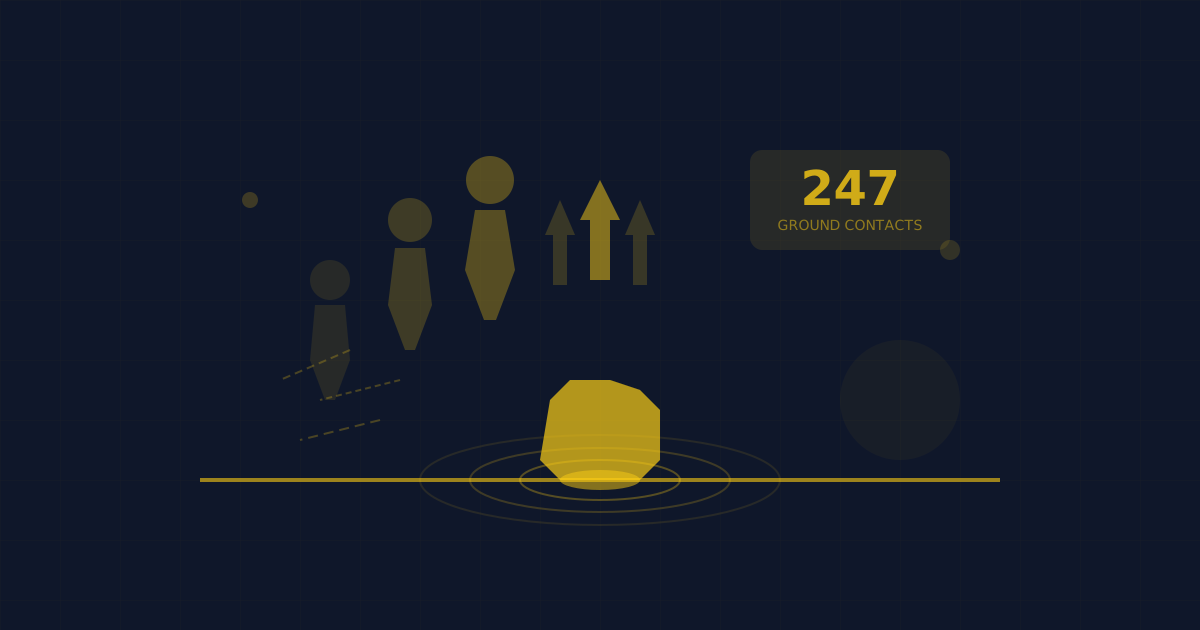
A ground contact is exactly what it sounds like: one landing from a plyometric movement. Every time your foot hits the ground during a jump, hop, or bound, that’s one ground contact.
Here’s how different exercises stack up:
- Box jump: 1 ground contact (you land on the box, step down)
- Squat jump: 1 ground contact per rep
- Depth jump: 2 ground contacts (drop off box + landing)
- Bounding: 1 ground contact per stride
- Single-leg hops: 1 ground contact per hop
The math matters. A workout with “3 sets of 10 squat jumps” creates 30 ground contacts. Add “3 sets of 5 depth jumps” and you’ve added another 30. That 60-contact session might be appropriate for a conditioned athlete—or it might be a recipe for injury in a beginner.
Why Ground Contacts Matter More Than Sets and Reps
Traditional programming focuses on sets and reps. But plyometrics aren’t like strength training. The stress isn’t primarily muscular—it’s on your tendons, bones, and connective tissue.
A heavy squat primarily stresses muscle fibers. Your muscles recover within 48-72 hours because they have excellent blood supply and repair mechanisms. But the impact forces from plyometrics stress tissues that recover much more slowly.
Consider the forces involved:
- Walking: 1-1.2x bodyweight per step
- Running: 2.5-3x bodyweight per stride
- Depth jump: 5-7x bodyweight at impact
When you’re absorbing forces 5-7 times your bodyweight, the limiting factor isn’t how tired your quads feel. It’s how much stress your patellar tendon, Achilles tendon, and bones can handle before microtrauma accumulates faster than repair.
This is why ground contact tracking exists. It gives you a concrete number to monitor and progress intelligently.
The Ground Contact Guidelines
Research and practical experience have established general guidelines for plyometric volume. These aren’t arbitrary—they’re based on decades of work with athletes across sports.
Beginner Athletes (Less than 6 months plyometric experience)
Target: 60-80 ground contacts per session
New athletes have untrained connective tissue. Even if their muscles feel fine, their tendons haven’t adapted to impact loading. Starting conservatively allows adaptation without overload.
Intermediate Athletes (6 months to 2 years experience)
Target: 100-120 ground contacts per session
With consistent training, connective tissue strengthens. Intermediate athletes can handle higher volumes, but should still respect the upper limits, especially when adding more intense exercises.
Advanced Athletes (2+ years experience)
Target: 120-150 ground contacts per session
Advanced athletes have robust connective tissue and can tolerate—and need—higher training volumes. However, even elite athletes rarely exceed 150 contacts in a single session.
The Color-Coded System
At PlyoPlanner, we’ve simplified volume monitoring with a traffic light system:
- 🟢 Green (Under 100 contacts): Safe zone for most athletes
- 🟡 Yellow (100-150 contacts): Appropriate for conditioned athletes
- 🔴 Red (Over 150 contacts): Caution—high volume, monitor recovery closely
This isn’t about being overcautious. It’s about sustainable progress. An athlete who trains consistently at appropriate volumes will outperform one who pushes too hard and ends up injured.
The Hidden Dangers of Ignoring Volume
Plyometric overtraining injuries are insidious because they develop gradually. Unlike a muscle strain that stops you immediately, tendon and bone stress accumulates invisibly until it becomes a serious problem.
Patellar Tendinopathy (Jumper’s Knee)
The most common plyometric overuse injury. Repetitive loading of the patellar tendon causes microtears that don’t fully heal between sessions. Early signs include stiffness after sitting and mild pain at the bottom of the kneecap during jumping.
By the time it hurts during every jump, you’re looking at 3-6 months of modified training—or longer.
Achilles Tendinopathy
Similar mechanism to patellar issues, but affecting the Achilles. Common in athletes who do high volumes of single-leg hops, bounds, or depth jumps. The Achilles absorbs enormous forces during landing and push-off.
Tibial Stress Fractures
The shinbone absorbs significant impact during plyometrics. Excessive volume without adequate recovery can cause stress reactions that progress to stress fractures. These often require 6-8 weeks completely off impact activities.
Plantar Fasciitis
The plantar fascia helps absorb landing forces. Overload it with too many ground contacts, and you’ll feel a stabbing pain in your heel that makes every step miserable.
All of these injuries share a common thread: they result from doing too much, too fast, with inadequate recovery. Ground contact tracking is your early warning system.
Programming Ground Contacts Intelligently
Knowing the guidelines is one thing. Applying them is another. Here’s how to build ground contact management into your programming:
Week-to-Week Progression
When starting a plyometric program, begin at the lower end of your experience level’s range. Progress by 10-20% per week maximum.
Example for a beginner:
- Week 1: 60 ground contacts
- Week 2: 66 ground contacts
- Week 3: 72 ground contacts
- Week 4: 80 ground contacts
- Week 5: Deload—50 ground contacts
Exercise Intensity Considerations
Not all ground contacts are equal. A line hop and a depth jump both count as one contact, but the stress they create is vastly different.
Higher intensity exercises warrant lower volume:
- Low intensity (line hops, ankle bounces): Full volume
- Moderate intensity (squat jumps, box jumps): 70-80% of max volume
- High intensity (depth jumps, single-leg bounds): 50-60% of max volume
If your athlete’s target is 100 ground contacts and you’re programming depth jumps, aim for 50-60 contacts total.
Frequency Matters Too
Plyometric training typically requires 48-72 hours recovery between sessions. This isn’t about muscle soreness—it’s about tendon and connective tissue repair.
For most athletes:
- 2-3 plyometric sessions per week maximum
- Never on consecutive days
- Reduce volume if other training is intense
Tracking Made Simple
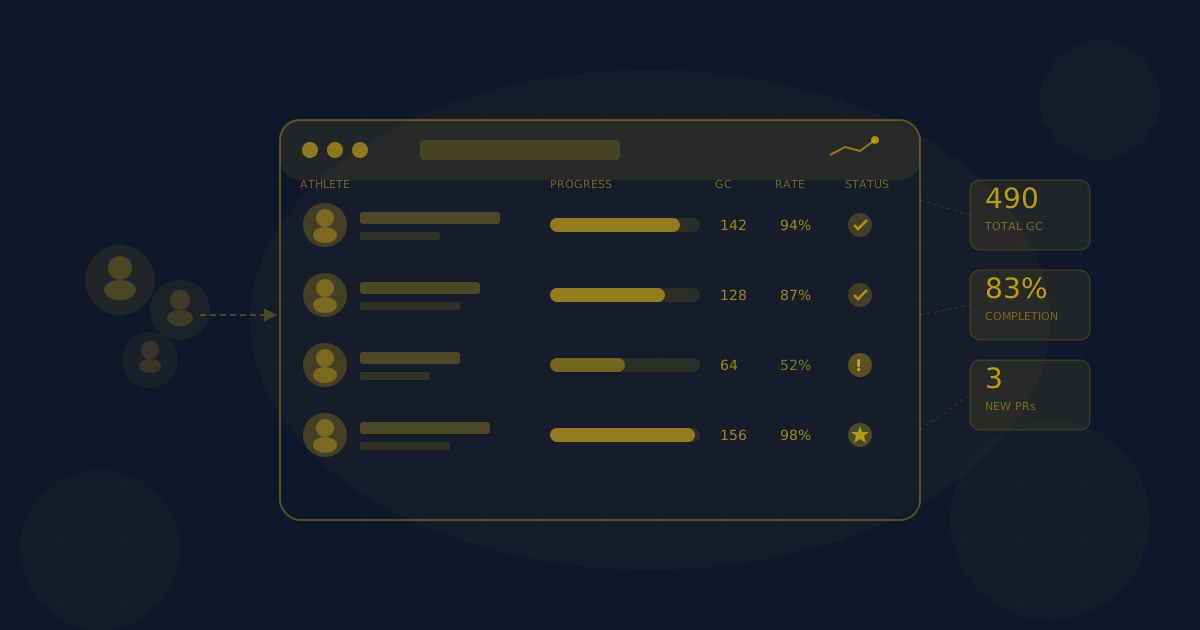
Manually counting ground contacts is tedious. That’s why PlyoPlanner’s Volume Calculator does it automatically.
As you build your workout, the calculator tallies ground contacts in real-time. The color-coded indicator shows immediately if you’re approaching risky territory. No spreadsheets, no math, no guesswork.
For athletes and coaches who take plyometric development seriously, this kind of automated tracking is essential. It removes the mental load of volume management so you can focus on quality coaching and training.
The Bottom Line
Ground contacts are the fundamental unit of plyometric volume. Track them, respect the guidelines, and progress gradually.
Athletes who manage their ground contacts intelligently:
- Avoid overuse injuries that sideline training
- Make consistent, sustainable progress
- Develop robust connective tissue over time
- Train harder when it counts because they’re not always recovering from too much
The athletes who ignore volume end up injured. The athletes who track it end up better.
Start counting. Your tendons will thank you.
Ready to build explosive power?
Start planning your plyometric training today. Free for athletes.
Get Started FreePlyoPlanner Team
Helping coaches and athletes train smarter