How to Track Your Plyometric Progress (And Why It Matters)
You’ve been jumping for weeks. Maybe months. The training feels hard. But here’s the question that matters: are you actually making progress?
Most athletes can’t answer that. They train on feel, hope for improvement, and wonder why results plateau. Meanwhile, the athletes who track their progress keep getting better—because they know exactly what’s working and what isn’t.
Tracking plyometric progress isn’t complicated. But it requires understanding a few key principles about how explosive power develops and what to measure.
Why Tracking Matters for Explosive Athletes
Plyometric training is built on progressive overload—the principle that you must systematically increase training demands to keep improving. Without tracking, you can’t apply progressive overload properly.
Here’s what happens when athletes don’t track:
- They repeat the same workouts indefinitely. Without data showing improvement (or lack thereof), there’s no signal to change anything.
- They misjudge recovery needs. Plyometrics are high-intensity by nature. Training blind means you can’t spot overtraining patterns.
- They miss small gains. A 1-inch vertical jump improvement over 6 weeks doesn’t feel different in training. But those incremental gains compound into major performance improvements over time.
- They can’t identify what works. Different athletes respond to different training stimuli. Tracking reveals your personal formula.
The science is clear: athletes who track outperform those who don’t. Not because tracking has magical properties, but because it enables intelligent training decisions.
The Three Pillars of Plyometric Progress Tracking
Effective tracking covers three areas: performance testing, training load monitoring, and recovery indicators.
1. Performance Testing
Performance testing tells you if your explosiveness is actually improving. The key is consistency—test the same things, the same way, at regular intervals.
Essential tests:
- Vertical jump: The gold standard. Test standing and approach jumps.
- Broad jump: Measures horizontal power production.
- Sprint times: 10, 20, and 40 yards reveal acceleration and speed gains.
- Reactive strength index (RSI): Jump height divided by ground contact time. Tests true reactive ability.
Testing protocol:
- Test every 4-6 weeks
- Always test at the same time of day
- Test when fully rested (not after hard training)
- Take 3 attempts, record the best
- Use the same surface and equipment each time
The 4-6 week window matters. Test more often and you’re measuring daily performance variation, not real improvement. Test less often and you can’t course-correct when training isn’t working.
2. Training Load Monitoring
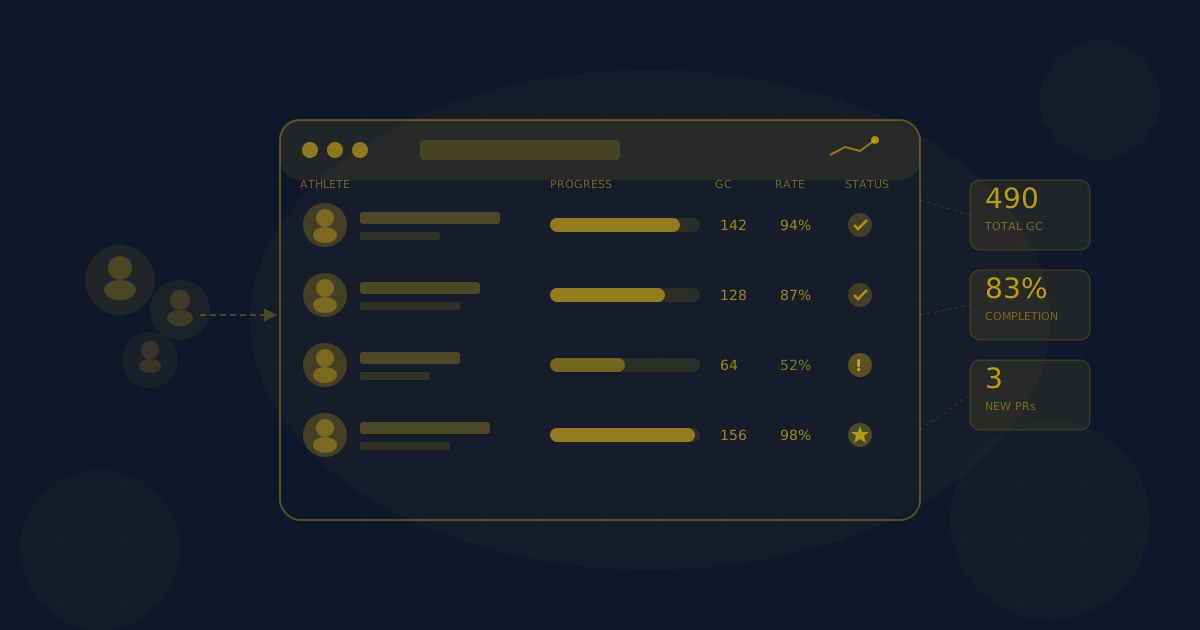
Training load is the stress you’re putting on your body. For plyometrics, the primary metric is ground contacts—the total number of foot contacts per session.
Ground contact zones:
- Low volume: 60-80 contacts (beginners, recovery weeks)
- Moderate volume: 80-120 contacts (most training sessions)
- High volume: 120-150 contacts (advanced athletes, overreaching phases)
- Very high volume: 150+ contacts (rare, requires excellent recovery capacity)
But volume alone doesn’t tell the whole story. A depth jump from a 30-inch box is far more demanding than a line hop. That’s where intensity classification comes in.
Intensity categories:
- Low intensity: Ankle hops, line hops, jump rope
- Moderate intensity: Box jumps, standing long jumps, skipping
- High intensity: Depth jumps, drop jumps, single-leg bounds
- Very high intensity: Weighted jumps, extreme depth drops
Track both volume and intensity. A session with 100 low-intensity contacts is very different from 100 high-intensity contacts.
3. Recovery Indicators
Plyometrics stress the nervous system and connective tissues more than most training. Recovery tracking helps you avoid the invisible buildup toward injury or burnout.
What to monitor:
- Perceived soreness: Rate leg soreness daily (1-10 scale)
- Performance dips: If vertical jump drops more than 5% during warm-up jumps, you’re under-recovered
- Sleep quality: Poor sleep = poor recovery = poor adaptation
- Motivation: Persistent lack of enthusiasm often signals accumulated fatigue
You don’t need fancy technology. A simple daily log works. The key is noticing trends—a few days of elevated soreness is normal; two weeks of it isn’t.
Progressive Overload for Plyometrics
Understanding how to apply progressive overload separates effective programs from random jumping.
Progressive overload doesn’t just mean “do more.” For plyometrics, you have multiple progression levers:
Volume Progression
Add ground contacts gradually. A common approach: increase weekly volume by 10-15% every 2-3 weeks, then include a deload week at reduced volume before the next progression.
Example 4-week block:
- Week 1: 300 weekly contacts (baseline)
- Week 2: 330 weekly contacts (+10%)
- Week 3: 360 weekly contacts (+10%)
- Week 4: 240 weekly contacts (deload, 66% of peak)
Intensity Progression
Shift the ratio toward higher-intensity exercises as you adapt.
Early training phase:
- 60% low intensity, 30% moderate, 10% high
Later training phase:
- 30% low intensity, 40% moderate, 30% high
Never rush intensity progression. Connective tissue adapts slower than muscles. Athletes who jump to high-intensity work too quickly often end up injured.
Complexity Progression
Add movement complexity as foundational patterns become automatic.
- Two-leg jumps → Single-leg jumps
- Vertical jumps → Lateral and rotational jumps
- Linear bounds → Multi-directional bounds
- Predictable drills → Reactive drills
Complexity progression keeps the nervous system challenged even when volume and intensity hold steady.
What to Track: The Minimum Effective Log
You don’t need elaborate tracking systems. Here’s what actually matters:
After every session:
- Date
- Total ground contacts
- Intensity breakdown (low/moderate/high percentages)
- Exercises performed
- Perceived effort (1-10)
- Notable observations (felt great, hamstrings tight, new PR, etc.)
Weekly:
- Total weekly ground contacts
- Average perceived recovery (1-10)
- Any performance testing results
Monthly:
- Full performance test results
- Comparison to previous month
- Training adjustments for next month
A notebook works. A spreadsheet works better. A dedicated training app works best—because it does the math for you and shows trends visually.
Common Tracking Mistakes
Tracking too much. If you’re logging 20 variables per session, you’ll stop logging within two weeks. Track the essentials and do it consistently.
Not testing often enough. Monthly testing is the minimum. Without regular benchmarks, you’re guessing.
Ignoring recovery data. Volume and performance tracking mean nothing if you’re driving yourself into the ground. Recovery indicators often predict injuries before they happen.
Changing everything at once. Good tracking enables you to change one variable at a time and see its effect. Change everything simultaneously and you learn nothing.
Obsessing over daily numbers. Day-to-day variation is noise. Look at trends over weeks and months.
The Compound Effect of Tracking
Here’s what consistent tracking actually looks like over time:
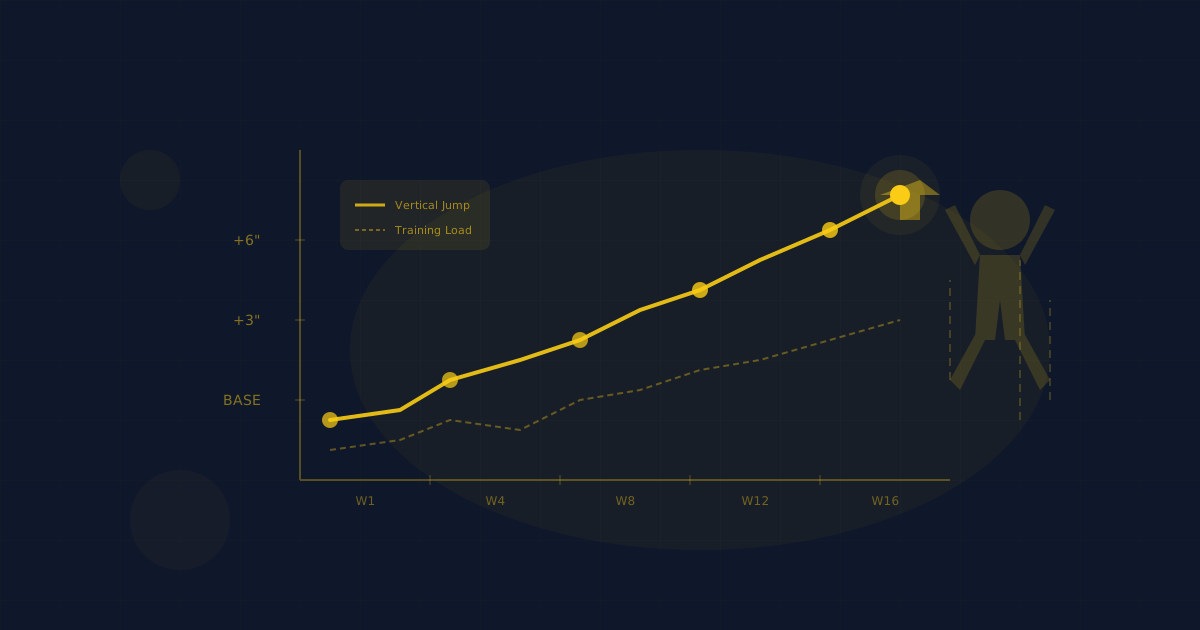
An athlete starts with a 24-inch vertical jump. They track religiously, adjust training based on data, and apply progressive overload intelligently.
- Month 1: 24.5 inches (+0.5”)
- Month 3: 25.5 inches (+1” from month 1)
- Month 6: 27 inches (+2.5” from baseline)
- Month 12: 30 inches (+6” from baseline)
Half an inch per month doesn’t feel like progress. But compound those gains over a year and you’ve added six inches—a transformational improvement.
The athletes who don’t track? They train inconsistently, plateau without knowing why, and end up at 25 inches after the same year of work.
Start Today
Pull out your phone. Note today’s date. Write down your most recent vertical jump, broad jump, and sprint time (or schedule a test for this week).
That’s your baseline. Everything from here is measurable progress—or a signal that something needs to change.
The athletes who track are the athletes who improve. The numbers don’t lie, and they don’t let you fool yourself. Start tracking, start improving.
Ready to build explosive power?
Start planning your plyometric training today. Free for athletes.
Get Started FreePlyoPlanner Team
Helping coaches and athletes train smarter