Active Recovery After Training Sessions and Games: A Complete Guide
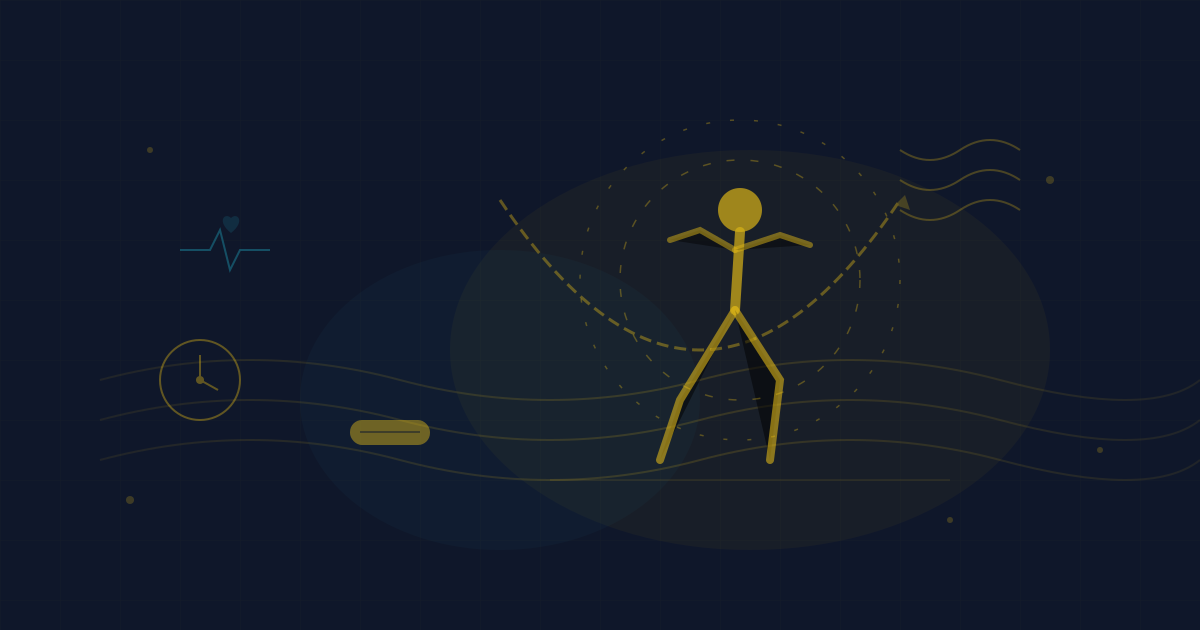
You just finished a hard training session or walked off the field after a competitive game. What you do in the next 30-60 minutes matters more than most athletes realize.
Active recovery isn’t optional—it’s part of training. Skip it consistently and you’ll accumulate fatigue, lose mobility, and increase your injury risk. Get it right and you’ll recover faster, adapt better, and show up to your next session ready to perform.
What Is Active Recovery?
Active recovery means low-intensity movement performed after high-intensity work. It’s the opposite of passive recovery (sitting on the couch), but it’s not training. The goal is to promote blood flow, clear metabolic waste, and prepare your body for the next session—not to create additional training stress.
Think of it as helping your body transition from performance mode back to recovery mode.
Active recovery includes:
- Light movement (walking, easy cycling, swimming)
- Dynamic stretching and mobility work
- Foam rolling and soft tissue work
- Controlled breathing exercises
What it doesn’t include:
- Anything that elevates your heart rate significantly
- Movements that challenge strength or power
- Adding volume to already-stressed tissues
Why Active Recovery Works
When you train hard or compete, several things happen in your body:
Metabolic byproducts accumulate. Intense exercise produces lactate, hydrogen ions, and other metabolites. While these aren’t as harmful as old-school “lactic acid” theories suggested, elevated levels can contribute to that heavy, fatigued feeling.
Tissues become inflamed. Controlled inflammation is part of the adaptation process, but excessive inflammation delays recovery and increases stiffness.
Neural fatigue sets in. High-intensity work taxes your nervous system. This affects coordination, reaction time, and your ability to produce force.
Muscles tighten. After intense contractions, muscles can remain in a shortened, tense state.
Active recovery addresses all of these:
Blood flow clears metabolites. Light movement keeps blood circulating without adding stress. This helps transport waste products to be processed and brings fresh nutrients to working tissues.
Movement reduces stiffness. Gentle motion through full ranges maintains mobility that would otherwise decrease as you cool down.
Low-intensity work calms the nervous system. It helps shift from sympathetic (fight or flight) to parasympathetic (rest and digest) dominance.
The 30-Minute Active Recovery Protocol
Here’s a structured protocol you can implement immediately after training or games. Adjust timing based on what you have available—something is always better than nothing.
Phase 1: Movement (10 minutes)
Start with 8-10 minutes of light aerobic activity. The goal is elevated blood flow without elevated effort.
Options:
- Walking at a conversational pace
- Easy cycling (resistance minimal)
- Light swimming or pool walking
- Slow jogging (if truly light—most people go too hard)
Intensity guide: You should be able to hold a full conversation easily. Heart rate should be 50-60% of max, or roughly 100-120 bpm for most athletes. If you’re breathing hard, you’re going too fast.
For plyometric athletes specifically: cycling or swimming are often better than jogging immediately post-session. Your legs have already absorbed significant impact—additional ground contact, even light, adds cumulative stress.
Phase 2: Dynamic Mobility (10 minutes)
After light movement, transition to dynamic stretching and mobility work. This maintains the ranges of motion you need for performance while your body is still warm.
Lower Body Sequence:
- Walking quad pulls (10 each leg)
- Walk forward, pulling heel to glute each step
- Hold 2 seconds at the top
- Walking RDL stretch (10 each leg)
- Hinge forward on one leg, opposite leg extends behind
- Feel hamstring stretch, return to standing, step forward
- Lateral lunge walks (10 each direction)
- Step wide to the side, sit into hip
- Push back to center, repeat other side
- Hip circles (10 each direction, each leg)
- Standing on one leg, draw large circles with the other knee
- Focuses on hip capsule mobility
- Ankle circles and calf walks (30 seconds)
- Circle ankles both directions
- Walk on toes, then on heels
Upper Body Additions (if applicable):
- Arm circles (10 each direction)
- Progress from small to large
- Forward and backward
- Thoracic rotations (10 each side)
- On hands and knees, place one hand behind head
- Rotate to open chest toward ceiling
Phase 3: Soft Tissue Work (10 minutes)
Foam rolling and soft tissue work helps release tension that accumulated during training. Focus on areas that worked hardest.
For plyometric athletes, prioritize:
- Calves and Achilles (90 seconds each)
- Roll slowly from ankle to knee
- Pause on tender spots for 20-30 seconds
- Quads and hip flexors (90 seconds each)
- Include outer quad (IT band region)
- Don’t roll directly on the IT band—roll the muscles around it
- Glutes (60 seconds each)
- Sit on the roller, cross one ankle over opposite knee
- Roll the glute of the crossed leg
- Upper back (60 seconds)
- Arms crossed over chest
- Roll between shoulder blades
Rolling technique matters:
- Move slowly—2-3 seconds per roll
- When you find a tender spot, pause and breathe into it
- Don’t roll over joints or bones
- Pressure should be uncomfortable but not painful
Optional: Controlled Breathing (5 minutes)
If time allows, finish with deliberate breathing to shift your nervous system toward recovery.
Simple protocol:
- Lie on your back, knees bent
- Inhale through your nose for 4 counts
- Hold for 2 counts
- Exhale through your mouth for 6 counts
- Repeat 10 times
The extended exhale activates the parasympathetic nervous system. This reduces cortisol, lowers heart rate, and signals to your body that the stress is over.
Game Day vs. Training Day Recovery
Recovery needs differ based on the type of session you’re recovering from.
After Training Sessions
Training is controlled stress. You chose the exercises, volume, and intensity. Recovery can be more standardized.
Focus on:
- Addressing the specific muscles you trained
- Maintaining mobility in the patterns you used
- Preparing for the next scheduled session
Timing: Can often be done immediately after training as part of your session.
After Games and Competitions
Competition involves unpredictable stress—physical and mental. You likely moved in ways you didn’t plan, experienced contact, and dealt with emotional intensity.
Additional considerations:
Mental recovery matters. Competition creates psychological stress even when you win. Include deliberate breathing or quiet time to process.
Address unexpected stress. You might have tweaked something, absorbed unexpected contact, or moved in unusual patterns. Pay attention to what feels tight or off.
Nutrition timing is critical. After games, get protein and carbohydrates in quickly. Competition depletes glycogen and breaks down muscle tissue.
Don’t skip it because you’re tired. Post-game fatigue makes athletes want to collapse. At minimum, do the light movement phase—even 10 minutes of walking helps.
Common Active Recovery Mistakes
Mistake 1: Going Too Hard
The most common mistake. Active recovery should feel easy—almost boring. If you finish your “recovery” session sweating heavily or breathing hard, you trained instead of recovered.
Fix: Use heart rate as a guide. Stay below 60% of max. If you don’t track heart rate, use the talk test—you should be able to speak in full sentences.
Mistake 2: Skipping It When Busy
“I don’t have time” usually means “I don’t prioritize it.” Ten minutes of active recovery is better than zero. Five minutes is better than nothing.
Fix: Make it non-negotiable. Build 10-15 minutes into your training schedule. If you’re truly time-pressed, do the light movement phase only—walking is always available.
Mistake 3: Static Stretching Too Early
Static stretching immediately after high-intensity work isn’t harmful, but it’s less effective than dynamic mobility when your goal is maintaining performance ranges.
Fix: Use dynamic stretches first while you’re still warm. Save static stretching for evening or off days if you enjoy it.
Mistake 4: Only Recovering What Hurts
Just because your quads aren’t sore doesn’t mean they don’t need attention. Full-body recovery protocols prevent compensation patterns from developing.
Fix: Run through the complete protocol regardless of where you feel fatigue. What feels fine today might become a problem if neglected over weeks.
Mistake 5: Ice Baths After Every Session
Cold exposure has a place, but using it after every training session may actually blunt adaptation. The inflammatory response to training is part of how you get stronger.
Fix: Reserve ice baths for competition recovery or when you have multiple sessions in a day. For regular training, stick with the active recovery protocol.
Building Active Recovery Into Your Schedule
The best recovery protocol is one you actually do. Here’s how to make it automatic.
Immediately Post-Session (Ideal)
Complete the full protocol within 30-60 minutes of finishing. Your body is still warm, you’re already in training mode, and nothing interrupts the routine.
Split Protocol (Practical Alternative)
If you can’t do everything immediately:
- Immediately after: Light movement phase (10 minutes)
- Later that day: Mobility and foam rolling (15-20 minutes)
This works well for athletes who train in the morning and have time in the evening.
Non-Training Days
Light active recovery on rest days can actually help you recover faster. A 20-30 minute walk, easy bike ride, or swim keeps blood flowing without creating stress.
Just remember: rest days are for recovery. Keep intensity genuinely low.
Equipment Options
Minimal Equipment
You can do effective active recovery with nothing:
- Walking (anywhere)
- Dynamic stretches (bodyweight)
- Breathing exercises (nothing needed)
Helpful Additions
Foam roller: Allows targeted soft tissue work. A basic high-density roller is sufficient.
Lacrosse ball: Gets into smaller areas—glutes, feet, upper back. More precise than a roller.
Resistance band: Can assist with dynamic stretches and traction movements.
Nice to Have
Massage gun: Speeds up soft tissue work but isn’t necessary.
Yoga mat: Makes floor work more comfortable.
Stationary bike or access to pool: Provides impact-free aerobic options.
Tracking Recovery
Recovery is harder to quantify than training, but you can still track it.
Simple metrics to log:
- Did you complete active recovery? (Yes/No)
- How did you feel the next day? (1-5 scale)
- Any persistent tightness or soreness?
Over time, patterns emerge. You might notice that skipping active recovery correlates with worse performance in subsequent sessions, or that certain mobility exercises specifically help your problem areas.
If you’re using PlyoPlanner to track your plyometric training, consider noting your recovery activities in the session comments. When reviewing training history, you’ll be able to correlate recovery habits with performance trends.
The Recovery Mindset
Active recovery requires accepting a different mode of operation. Training is about pushing limits. Recovery is about respecting them.
Athletes who struggle with active recovery often struggle with the mental shift:
- It feels unproductive (it isn’t)
- It feels like wasted time (it’s an investment)
- It feels too easy (that’s the point)
The best athletes understand that recovery is where adaptation happens. Training provides the stimulus. Recovery provides the response. Without adequate recovery, stimulus is just stress.
Make active recovery as consistent as your training. Your body will thank you with better performance, fewer injuries, and longer athletic careers.
Twenty to thirty minutes after every hard session. That’s the habit that separates athletes who peak from athletes who break down.
Ready to build explosive power?
Start planning your plyometric training today. Free for athletes.
Get Started FreePlyoPlanner Team
Helping coaches and athletes train smarter